
Worried that your thin corneas might stop you from getting rid of glasses or contact lenses? You’re not alone.
Many people walk into a LASIK consultation only to be told they’re “not eligible due to thin corneas.” And just like that — hope is replaced with frustration, confusion, or even fear.
But here’s the good news: several breakthrough vision correction options are specially designed for people with thin corneas — safer, smarter, and fully personalized to your eyes.
In this guide, we’ll break down:
- Why thin corneas matter in eye surgery
- Which surgeries are safe and effective
- What options work best for your power
Whether you’re nearsighted, farsighted, or just tired of contact lenses… even with thin corneas, we’ll help you discover the best options for a clear vision.
Let’s dive in!
What Causes Thin Corneas?

While most people have a cornea that’s about 520 to 550 microns thick, some have naturally thinner corneas, which can make certain eye surgeries riskier.
Common Causes of Thin Corneas
- Genetics: If thin corneas run in your family, you’re more likely to have them too.
- Keratoconus or Corneal Ectasia: These are conditions where the cornea becomes weak and starts to thin and bulge over time.
- Eye Rubbing: Excessive or frequent rubbing of the eyes (often due to allergies) can damage and thin out the cornea.
- Previous Eye Surgery: If you’ve had LASIK or any laser treatment before, your cornea may already be thinner than average.
- Nutritional or Hormonal Imbalances: In rare cases, a lack of proper nutrients or hormonal changes may impact corneal health.
How Can You Tell if You Have Thin Corneas?
Often, there are no symptoms until it’s diagnosed during a detailed eye scan. But in some cases, you might notice:
- Blurry or changing vision even with glasses or lenses
- Frequent changes in prescription – especially increasing minus power
- Glare or halos around lights, especially at night
- Increased sensitivity to light
If you notice any of these signs, it’s a good idea to get your eyes checked — especially before considering any vision correction surgery.
What is the Minimum Corneal Thickness Required for LASIK or ICL?
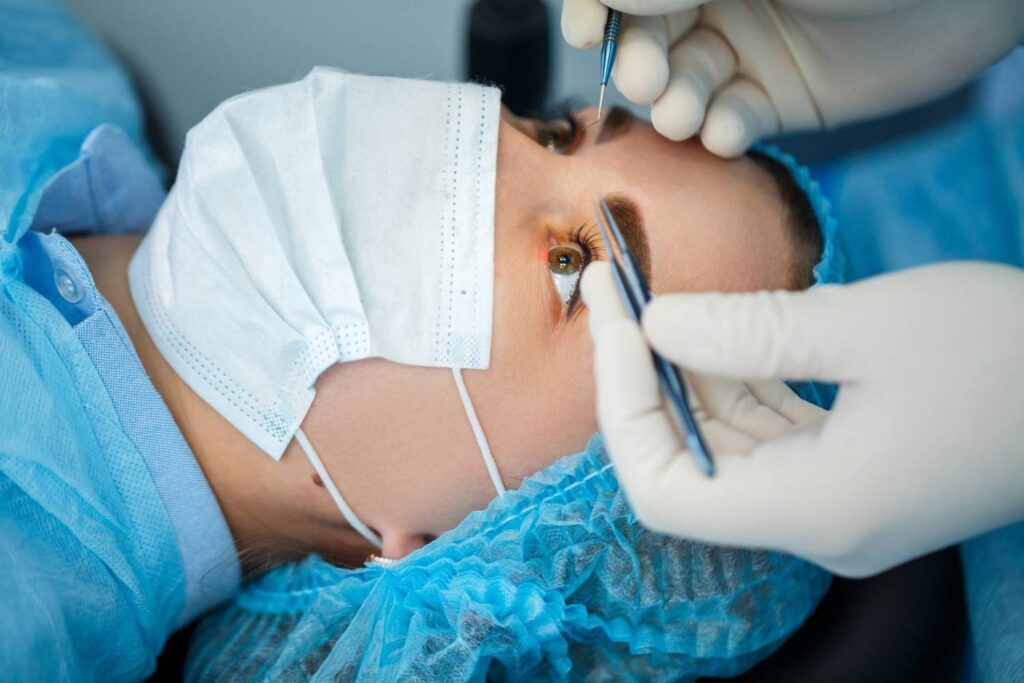
If you’re thinking about getting rid of glasses, the thickness of your cornea plays a huge role in deciding which procedure is safe for you.
- For LASIK surgery, doctors usually recommend a minimum corneal thickness of around 500 to 550 microns. That’s because LASIK uses an excimer laser to reshape the cornea, and part of the corneal tissue is removed during the process.
If your cornea is too thin:
- There might not be enough tissue left after reshaping
- It can increase the risk of corneal weakening or bulging later on (a condition called ectasia)
Therefore, usually LASIK is not suitable for people with thin or borderline corneas.
ICL (Implantable Collamer Lens) doesn’t involve reshaping your cornea at all. Instead, a soft, biocompatible lens is placed inside your eye — between the iris and natural lens.
The best part?
- It’s suitable for people with corneas as thin as 400 microns or even lower, depending on eye scans.
- It doesn’t remove or damage corneal tissue.
This means ICL is a much safer and more preferred option for people with thin corneas, high power, or those not eligible for LASIK.
Still unsure which one is right for you?
Don’t worry — a simple corneal scan (like pachymetry or pentacam) at our center can help decide the safest option for your eyes.
Best Eye Surgeries for Thin Corneas
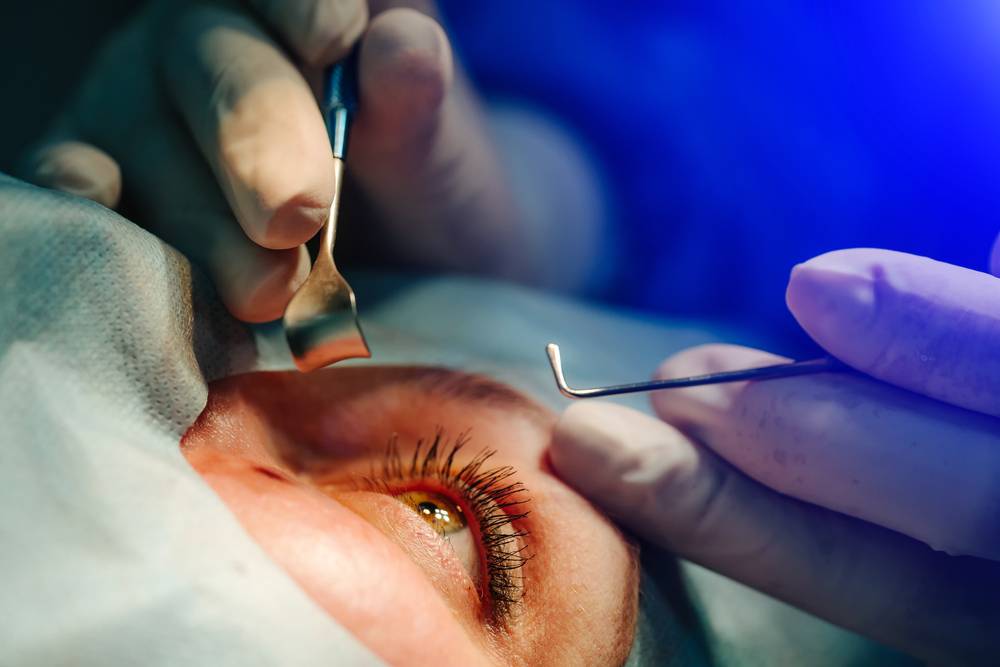
If you have thin corneas and still dream of saying goodbye to glasses — don’t worry, you’re not out of options. Thanks to today’s advanced eye procedures, there are safer alternatives even if LASIK may not be suitable. Let’s take a look at the top choices:
ICL (Implantable Collamer Lens): The Safest & Most Preferred Option
ICL is considered the best eye surgery for people with thin corneas.
Here’s why:
- No corneal cutting or reshaping – Your natural cornea stays untouched.
- Suitable for even extremely thin corneas – Sometimes as low as 400 microns or below.
- High prescription? No problem. ICL can correct powers from -3D to -20D, and even astigmatism.
- Crystal clear vision – Many patients report even better quality than with LASIK.
- Removable lens – ICL is reversible and upgradeable, making it safer long-term.
In short, if you’re not eligible for LASIK due to thin corneas or high numbers, ICL is usually the go-to solution.
CustomEyes (Wavefront-Guided Surface Ablation): A LASIK Alternative with Potential
While traditional LASIK might be risky for thinner corneas, CustomEyes — a surface ablation procedure — can still be considered in specific cases.
- Flapless and touchless – There’s no corneal flap, reducing structural risk.
- Better suited for borderline thickness (450–500 microns).
- Advanced laser precision – Uses wavefront-guided technology to customize correction down to microns.
- Ideal for mild to moderate powers and hyperopia.
- Faster healing than older surface techniques like PRK.
Doctors may recommend CustomEyes if your corneal thickness is slightly below LASIK safety thresholds but still within acceptable limits — and if your eye health and lifestyle align with the procedure.
What If I Already Have Dry Eyes and Thin Cornea?
Having both dry eyes and a thin cornea may seem like a double challenge — but the good news is: you’re not out of options.
These conditions often go hand in hand, and they do influence the type of surgery best suited for you. Here’s how to think about it:
❌ Why LASIK Might Not Be Ideal
- LASIK requires a corneal flap, which can further disrupt the eye’s surface and worsen dryness.
- It also removes part of your cornea, which can be risky if your cornea is already thin.
- That’s why LASIK is generally not recommended in such combined conditions.
✅ ICL: The Best Fit for Dry Eyes + Thin Corneas
- No corneal cutting: ICL surgery doesn’t alter or thin the cornea at all.
- Dry eye-friendly: Since the ocular surface remains untouched, there’s minimal chance of aggravating dry eyes.
- Safe for very thin corneas – even under 400 microns.
- Smooth, fast healing with fewer post-op drops and discomfort.
Before deciding on any procedure, your tear film stability, ocular surface health, and exact corneal thickness should be evaluated using advanced diagnostic scans.
What Will Be The Cost of the Surgery?
The cost of surgery for thin corneas depends on which option your doctor recommends. Here’s a quick idea:
If your corneas are very thin or your number is too high, ICL surgery is usually the best and safest option.
👉 Cost: Starts from ₹50,000 to ₹2,00,000 per eye
If your cornea is just slightly thinner than normal (say around 460–490 microns), CustomEyes (Foresight) might be suitable. It’s a surface ablation procedure, no cuts or flaps involved, and is known for precision and safety.
👉 Cost: Around ₹47,000 per eye
At EyeMantra, all costs include consultation, pre-surgery scans, and post-op checkups. No hidden charges. EMI and insurance support are available too.
Not sure which one’s right for you?
We’ll guide you after a proper eye test.
Conclusion
Having thin corneas doesn’t mean you can’t enjoy life without glasses. Thanks to advanced options like ICL and CustomEyes, you still have safe, effective, and long-term solutions available.
But remember—there’s no one-size-fits-all.
Your eye’s exact corneal thickness, number, dryness, and other medical factors decide what’s best for you.
That’s why a proper eye checkup and corneal scan is the first and most important step.
Our experienced doctors at EyeMantra will guide you through everything—from tests to treatment—so you make the safest choice.
Don’t wait. Book your free ICL surgery consultation today at India’s most trusted eye hospital. Call us at +91 9711116605.
Medically Reviewed By

Senior Eye Surgeon | LASIK, SMILE & Cataract Specialist

