Cataracts could be the reason behind permanent VISION LOSS!!! But thankfully, it is a safe and effective solution that can restore clear vision.
So, if you find it hard to read, drive, or see clearly in bright light, or if your vision is becoming blurry, hazy, or dull, it’s time to get your eyes checked!
But here’s the big question: Which lens should you choose? With advancements in technology, there are now multiple lens options that offer glasses-free vision.
Therefore, in this blog, we’ll explore:
- The best cataract lens options available in 2026
- Cost comparison of different lenses
- How to choose the right lens for your needs
- Whether cataract surgery is covered by insurance
And honestly, There’s no single “best” lens for everyone. Monofocal is the most affordable, multifocal and trifocal give you the most glasses-free vision, and toric is best if you have astigmatism. The right one for you depends on your budget, lifestyle, and eye health, which is exactly what this guide will help you figure out.
How Does a Cataract Lens Work?
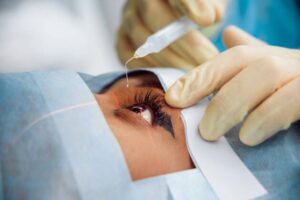
Cataract surgery is a quick and highly effective procedure that removes the cloudy natural lens from your eye and replaces it with a clear artificial lens called an Intraocular Lens (IOL). This allows you to see clearly again without the haziness caused by cataracts.
Understanding the Cataract Surgery Process
- A small incision is made in the eye.
- An ultrasonic machine is used to break the cataract into tiny pieces.
- The broken cataract is removed using suction.
- A clear artificial intraocular lens (IOL) is implanted in the same place.
- The procedure takes just 10-15 minutes, requires no stitches, no injections, and no eye patches.
Patients go home the same day and can resume normal activities as early as the next day
Also Read: Cataract Surgery: Risk and Treatment
Best Cataract Lens Options & Their Cost in 2026
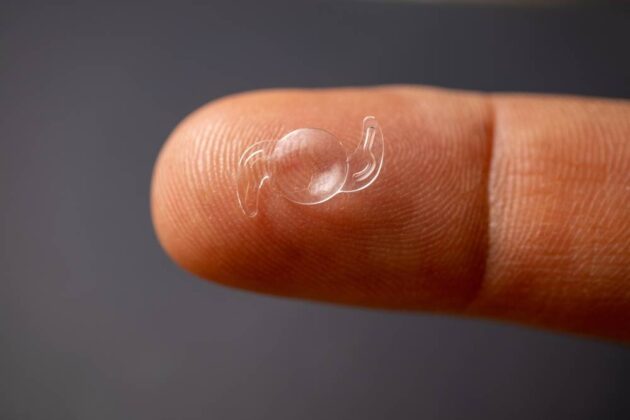
Choosing the right Intraocular Lens (IOL) for cataract surgery is crucial for achieving clear, sharp vision. The cost of cataract lenses varies based on the technology, brand, and features. Here’s a breakdown of the best cataract lens options available in 2026 and their approximate pricing (per eye).
Monofocal Lenses (Basic & Budget-Friendly)
Advantages:
- Gives the sharpest contrast and the fewest halos and glare, because the lens does not split light
- Most affordable, and standard monofocal lenses are usually covered by insurance and government schemes
- Long track record and a very good fit for most people
Limitations:
- You will need glasses for reading, and often for the computer
- A standard monofocal lens does not correct astigmatism
- Some enhanced monofocal lenses (such as Tecnis Eyhance) may give slightly better intermediate vision, but you will still need reading glasses
| Brand | Price (₹) per eye | Correction | Glasses Needed? |
|---|---|---|---|
| Care Acriol | ₹20,000 – ₹28,000 | Distance only | Needed for reading/computer work |
| Alcon AcrySof IQ | ₹55,000 | Distance only | Needed for near vision |
| J&J Tecnis Eyhance | ₹45,000 | Distance only | Needed for near vision |
Multifocal Lenses (For Glasses-Free Vision at All Distances)
Advantages:
- Clear near, intermediate and distance vision in one lens
- Less need for glasses after surgery
Limitations:
- Halos, glare and starbursts around lights, mostly at night or in dim light
- Reduced contrast (colours and objects can look less sharp)
- An adaptation period. Most people adjust over time, but some do not
- Higher cost, and insurance and government schemes usually do not cover it
Best for: people who read a lot and want to avoid glasses, and who do not drive much at night.
| Brand | Price (₹) per eye | Correction | Glasses Needed? |
|---|---|---|---|
| Acriol Multifocal | ₹30,000 | Distance + Near | Minimal use for fine print |
| J&J TECNIS | ₹45,000 | Distance + Near | Some may need reading glasses |
| Alcon Panoptix | ₹90,000 – ₹1,25,000 | Distance + Intermediate + Near | Usually minimal or no glasses |
EDOF (Extended Depth of Focus) Lenses (For Better Clarity & Less Dependence on Glasses)
Advantages:
- Smooth vision from distance to intermediate (for example screens and the car dashboard), plus some near vision
- Fewer halos and glare than multifocal and trifocal lenses, and better contrast
Limitations:
- Near vision is usually weaker than with trifocal lenses, so you may need glasses for small print
- Some halos and glare are still possible
- Higher cost than a standard monofocal lens
Best for: screen users and night drivers who want less dependence on glasses.
| Brand | Price (₹) per eye | Correction | Glasses Needed? |
|---|---|---|---|
| Care Magnificent | ₹55,000 | Distance + Intermediate + Some Near | Needed for fine print reading |
| Aurovue VIVID | ₹75,000 | Distance + Near + Some Intermediate | Minimal need for glasses |
| Swiss Lucidis | ₹65,000 | Distance + Near + Intermediate | Minimal need for reading glasses |
| Alcon Clareon Vivity | ₹1,00,000 – ₹1,05,000 | Distance + Intermediate + Some Near | Needed for fine print reading |
| PureSee IOL by Johnson & Johnson Vision | ₹1,00,000 – ₹1,50,000 | Seamless transition between near, intermediate, and distance vision | No glasses needed for distance vision |
Toric Lenses (For Cataract Patients with Astigmatism)
Advantages:
- Corrects corneal astigmatism during cataract surgery, giving sharper distance vision with less need for glasses
- Available with monofocal, EDOF, and trifocal designs (“toric” describes the astigmatism correction, not the focus range)
Limitations:
- A monofocal toric lens still needs reading glasses
- Needs precise eye measurements before surgery
- Rarely, the lens rotates and needs a small second procedure to reposition it
- Costs more, and insurance may not cover it fully
- Not suitable for every type of astigmatism
Best for: people with regular corneal astigmatism.
| Brand | Price (₹) per eye | Correction | Glasses Needed? |
|---|---|---|---|
| Care Acriol Toric (Indian) | ₹35,000 | Distance + Astigmatism | Needed for near vision |
| Zeiss, Alcon, Bausch & Lomb Toric (Premium Brands) | ₹45,000 | Distance + Astigmatism | Needed for reading |
Trifocal Lenses (For Distance, Near & Computer Vision)
Advantages:
- Clear near, intermediate (computer) and distance vision
- The highest chance of glasses independence among these lens types
Limitations:
- Most likely to cause halos and glare at night, and some loss of contrast
- You need healthy eyes to get a good result
- Higher cost, and insurance and government schemes usually do not cover it
- Some people still need glasses for fine print
Best for: people who put glasses freedom first, read and use screens a lot, and do not drive much at night.
| Brand | Price (₹) per eye | Correction | Glasses Needed? |
|---|---|---|---|
| Tridiff (Hydrophilic) | ₹45,000 | Distance + Near + Intermediate | Minimal need for reading |
| Triphobic (Hydrophobic) | ₹75,000 | Distance + Near + Computer | Usually minimal or no glasses |
| Rayner (Premium) | ₹70,000 | Distance + Intermediate + Near | Usually minimal or no glasses |
| Alcon Panoptix | ₹90,000 – ₹1,25,000 | Distance + Intermediate + Near | NUsually minimal or no glasses |
Panfocal Lenses
- Provides seamless, glasses-free vision at all distances (near, intermediate, and far).
- Eliminates issues like glare, halos, and reduced contrast sensitivity seen in trifocal lenses.
- Best for patients looking for the most natural visual experience post-surgery.
| Brand | Price (₹) per eye | Correction | Glasses Needed? |
|---|---|---|---|
| Natura Panfocal (Care Group) | ₹70,000 | Distance + Intermediate + Near | Usually minimal or no glasses |
| Lucidis Panfocal (Swiss) | ₹65,000 | Distance + Intermediate + Near | Usually minimal or no glasses |
| Alcon PanOptix Panfocal (USA) | ₹1,00,000 | Distance + Intermediate + Near | Usually minimal or no glasses |
Light Adjustable Lens (LAL)- The Newest 2026 Option
The Light Adjustable Lens is one of the newest advances in cataract lens technology. Unlike other lenses, its power can be fine-tuned after surgery using a special light treatment, useful for patients who’ve had previous eye surgeries like LASIK, where standard lens calculations can be less precise.
This lens is currently available only at select centres in India and is priced around ₹1,20,000–₹1,50,000 per eye. Ask our team during your consultation about which lens option is the right and available fit for you.
Choosing the Right Lens: What to Consider?
- Budget: Monofocal lenses are more affordable, while multifocal, EDOF, and trifocal lenses offer better vision at a higher price.
- Vision Needs: If you want complete glasses-free vision, multifocal, trifocal, or Panfocal lenses are the best options.
- Night Vision: EDOF and Panfocal lenses offer better contrast, reduced glare, and better vision for night driving.
- Astigmatism: Toric lenses are best if you have cylindrical vision issues.
With multiple lens options available, consulting a doctor can help you choose the best IOL based on your vision needs and lifestyle.
Who Should Be Careful With Multifocal and Trifocal Lenses?
Multifocal and trifocal lenses work best in otherwise healthy eyes. They may not be the right choice if you have:
- Macular degeneration, diabetic retinopathy or other retina problems
- Glaucoma
- A scarred or irregular cornea, or severe dry eye
- Uncorrected astigmatism
- Weak support for the lens inside the eye (your surgeon checks this)
They are also not ideal if you drive a lot at night, do detailed work in dim light, or expect perfect, glasses-free vision in every situation. Your surgeon decides after a full eye examination.
What to expect after a premium lens: many people notice halos or glare around lights at first. Most adapt over weeks to months. Tell your surgeon if you drive at night often, so they can suggest an EDOF or monofocal lens instead.
Is Cataract Surgery Covered by Insurance?
Yes, in most cases. Here’s how coverage usually works:
- Government schemes (Ayushman Bharat, CGHS, ESI): Cover the surgery and a
standard monofocal lens at no cost for eligible patients. - Private health insurance: Most comprehensive plans cover the surgery
and a standard lens. Always check your policy for exact terms. - Premium lenses (multifocal, trifocal, EDOF, toric): These usually involve
an extra out-of-pocket cost, since insurance and government schemes typically
cover only the standard lens.
Not sure what your policy or scheme covers? Our team can check this for you before your surgery, so there are no surprises on the day.
Get Clear Vision Back!
Cataract surgery is a life-changing procedure, but choosing the right lens is just as important as the surgery itself. The right Intraocular Lens (IOL) can determine whether you’ll still need glasses or enjoy crystal-clear vision at all distances.
With advanced lens options like multifocal, EDOF, toric, trifocal, and panfocal lenses, you can select a solution that matches your lifestyle, budget, and vision needs. But with so many choices, how do you know which lens is right for you?
📞 Suffering from cataracts? Want to know which lens best suits your vision?
Book a free consultation for cataract surgery at +91 9711116605!
Frequently Asked Questions
Ans. There’s no single “best” lens monofocal is best for budget, multifocal or trifocal for full glasses-free vision, and EDOF for reduced glare with fewer glasses. Your ideal choice depends on your vision goals and budget.
Ans. Monofocal lenses are the cheapest option, starting around ₹20,000–₹28,000 per eye, though they usually still need reading glasses for close-up work.
Ans. Multifocal, trifocal, and panfocal lenses offer the most glasses-free vision, correcting near, intermediate, and distance sight in one lens.
Ans. Monofocal lenses correct vision at only one distance and need glasses for other tasks. Multifocal lenses correct multiple distances, reducing or eliminating the need for glasses.
Ans. The right IOL depends on your budget, lifestyle, night driving needs, and whether you have astigmatism, a consultation with your eye surgeon is the best way to decide.
The Light Adjustable Lens is a newer lens whose power can be fine-tuned after surgery with light treatments. It is not widely available in India, and EyeMantra does not currently offer it.
Usually not fully. Most insurance plans and government schemes cover the surgery and a standard monofocal lens. Premium lenses like multifocal trifocal, or EDOF typically involve an additional out-of-pocket cost.
Medically Reviewed By

Senior Eye Surgeon | LASIK, SMILE & Cataract Specialist

