
If you or a loved one has been diagnosed with a cataract, your doctor has likely mentioned surgery — but with so many options available today, it can be hard to know what to choose. Phaco, Femto, Zepto, ECCE — what do these all mean, and which one is right for your eye? This guide breaks down every type of cataract surgery available in India, explains the differences clearly, and helps you understand what to expect — including costs, recovery, and lens options.
What Is A Cataract? (And When Do You Need It?)
Cataract surgery is the presence of a cloudy substance in the lens of the eyes. This cloudy substance is the broken down proteins in the lens which eventually leads to blurry vision or even blindness. The function of a natural lens is to refract the light rays to the retina (which forms an image). But a cataract lens restricts the light rays to fall on the retina properly, causing blurred vision.
Surgery is recommended when the cataract starts interfering with your daily activities — reading, driving, or recognizing faces. The good news is that cataract surgery is one of the safest and most successful procedures in modern medicine, with over 90% of patients reporting improved vision afterward.
Cataract Surgery Or IOL Surgery
It is the surgical procedure of removal of the lens with a cloudy substance and replacing it with an artificial lens. The artificial lens also called an intraocular lens (IOL), restores clear vision back. An initial cataract is treated with medicated eye drops, eyeglasses and finally with surgery when it is fully grown. Surgery is the only way to remove the cataract lens permanently. But surgery can only be performed when the cataract developed fully.
Procedure– If your eyesight has become blurry and you find it hard to see in bright light. Your doctor may suggest you to go for surgery. Cataract surgery is done within 20 minutes but it would take some time to go back to normal life. You will spend 3-4 hours in the hospital because of anaesthesia. This surgery is painless and quick.
Your surgeon will make a tiny cut in the outermost layer of your eye. Then either they will put in a small tool or laser rays to break the cataract and finally suction out. Your natural lens will be replaced with IOL. If you have a cataract in both eyes, surgery will be performed one eye at a time. Your next surgery will be after a few weeks.
Cost of Cataract Surgery
The cost of cataract eye surgery defers in every hospital. Hospitals charges according to the quality of lens they are using and the facilities they are providing. Usually, the cost starts from 35K and ranges up to 1 lac. Eye mantra hospital one of the top five eye hospitals in Delhi performs Cataract surgery at 25K only. Eyemantra provides the best type of lens with the most experienced surgeon. You will be assisted before and after your surgery properly.
Types of Cataract Surgery
cataract surgery could be of many types based on the type of cataract, size of the incision, and techniques used for the surgery. it especially depends on the health of the eye undergoing surgery.
Phacoemulsification (phaco)
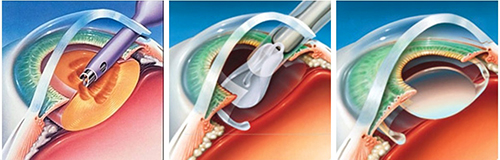
Phaco also known as ‘’small incision cataract surgery’’ is a procedure for cataract removal. In this procedure, a tiny cut is made on the side of the cornea. The cornea is a dome-shaped outermost layer of the eye. The surgeon inserts a device in the eye, that emits ultrasonic waves on the lens. These waves break the cataract lens into tiny fragments. Then, these broken fragments of the lens are suctioned out gently with the help of a probe. This process of breaking cataract into tiny fragments is called phacoemulsion.
Key advantages: No stitches required, fast recovery (usually 1–2 weeks), minimal post-operative discomfort, and same-day discharge. Micro-phaco, a variation, uses an even smaller incision of 2.2 mm for faster healing.
Best for: Most cataract patients, especially those with early to moderate cataracts.
Extracapsular Cataract Extraction (ECCE)
Extracapsular Cataract Extraction is used when a cataract is too dense to be broken up with ultrasound. In this procedure, the surgeon makes a larger incision (about 10–12 mm) and removes the lens in one piece. Stitches are then used to close the wound.
Key advantages: Effective for very hard or advanced cataracts that aren’t suitable for phaco.
Considerations: Recovery takes longer (about 4–8 weeks), stitches are needed, and vision improves more gradually. While it’s less common today, it’s still an important option in certain cases.
Femtosecond Laser Cataract Surgery
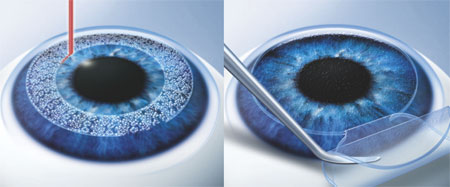
Femtosecond surgery is a different option possible for your doctor to use as cataract surgery. It is an FDA approved computer-guided laser that is processed by the surgeon. This device can help the surgeon in the performance of some of the steps included in the elimination of a cataract. It can also be used in procedures conducted to correct astigmatism.
Key advantages: Blade-free and highly precise, reduced ultrasound energy needed (less stress on the eye), can simultaneously correct corneal astigmatism with laser toric cuts, more predictable IOL positioning.
Best for: Patients with astigmatism, those seeking the highest level of precision, and premium IOL implantation.
Zepto Capsulotomy Device For Surgery
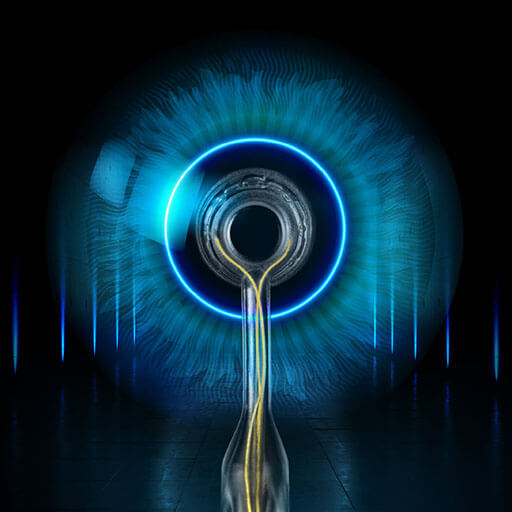
Zepto is one of the newest technologies in cataract surgery. A soft, disposable handheld device delivers a precise pulse of energy to create a perfectly circular capsulotomy in under 4 milliseconds — without laser equipment. It combines the precision of femto with the simplicity of a manual approach, making it accessible in more surgical settings.
Key advantages: Consistently circular capsulotomy, improves IOL centration, reduces the risk of post-operative complications, no need for a laser platform.
Best for: Patients requiring premium IOL implantation where capsulotomy precision is critical.
Intracapsular Cataract Extraction (ICCE)
It involves the removal of the lens and the enclosing lens capsule in one section. The procedure has a comparatively high rate of difficulties due to the large incision required and pressure placed on the vitreous body. It has consequently been largely replaced and is usually done in countries where working microscopes and advanced-technology equipment are easily accessible. After lens removal, an artificial plastic lens an intraocular lens implant can be set in either the anterior chamber or sutured into the sulcus.
Which Type of Cataract Surgery Is Best for You?
There is no single “best” cataract surgery — the right choice depends on several factors:
- Cataract density: Very advanced or hard cataracts may require ECCE rather than phaco
- Astigmatism: Femto laser or toric IOLs are recommended
- Budget: Phaco is effective and affordable; femto and zepto involve higher costs
- Lifestyle goals: Patients wanting spectacle-free vision should consider multifocal or EDOF IOLs
- Surgeon’s recommendation: Based on biometry measurements and corneal topography
At EyeMantra, our cataract specialists conduct a thorough pre-operative evaluation to recommend the most suitable surgery type and IOL for each patient.
Why Choose EyeMantra for Cataract Surgery?
EyeMantra is among Delhi NCR’s leading eye hospital networks for cataract surgery, offering phaco, femto laser, and zepto capsulotomy across centres in Delhi, Noida, Gurugram, Ghaziabad, and Bahadurgarh. Our experienced cataract surgeons use the latest technology to ensure precision, safety, and rapid visual recovery. To book, prior appointments, call at +91-9711115191. Customer is our First Priority!
For the newest information about laser cataract surgery, ask our eye doctor while your preoperative eye exam and cataract surgery consultation. Our other services include Neuro-Ophthalmology, Pediatric Ophthalmology, Squint Correction, and many more.
FAQs
The three main types of cataract surgery are Phacoemulsification (Phaco), Femtosecond Laser Cataract Surgery (Femto), and Extracapsular Cataract Extraction (ECCE). Phaco is the most common, Femto offers bladeless precision, and ECCE is used for advanced, dense cataracts. Zepto is an emerging fourth option gaining popularity in India.
Phaco uses a manual blade and ultrasound to break the lens, while Femto uses a computer-guided laser for the incision and lens fragmentation. Femto is more precise and can simultaneously correct astigmatism, but costs more than standard phaco.
Yes, to a significant extent. With the right IOL choice — such as multifocal, EDOF, or toric lenses — many patients achieve spectacle independence or significantly reduced dependence on glasses after cataract surgery.
Related Articles
Medically Reviewed By

Senior Eye Surgeon | LASIK, SMILE & Cataract Specialist

