
What Is Vitreous Humour?
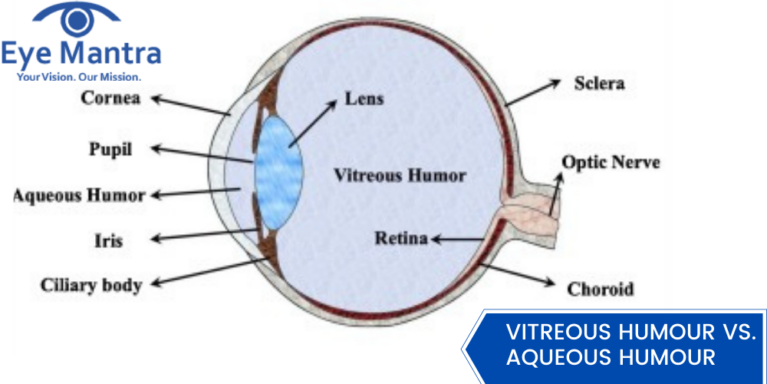
The eye consists of three sections including the anterior chamber, the vitreous chamber, and the posterior chamber. The vitreous chamber exists at the back of the eyeball and covers around 80% of the area. The vitreous humour is a colourless fluid that appears to be a jelly-like substance.
It is responsible for filling the space between the lens and retina of your eye and acts as a protector of your eye by keeping the retina in place. The vitreous humour, also known as “vitreous” is a mixture of 99% of water along with collagen, salts, protein, and sugars.
Vitreous Humour Function
Vitreous is responsible for maintaining the shape of the eye and help it retain its spherical shape. Moreover, it helps the retina to stay unaffected from any kind of shock. The vitreous humour absorbs the shock waves and prevents the retina from getting detached. Moreover, it absorbs the light rays which enters the eye and directs them to the retina.
Vitreous Humour vs. Aqueous Humour
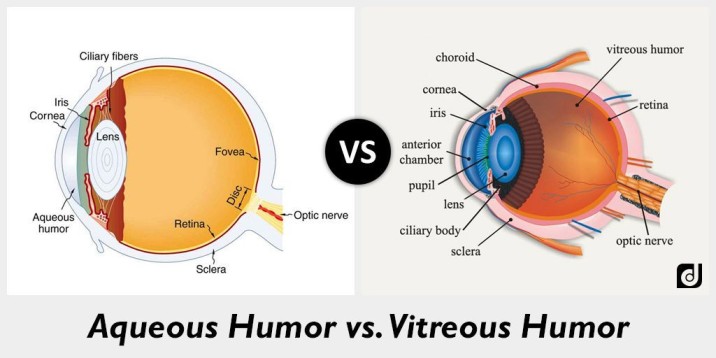
| Feature | Vitreous Humor | Aqueous Humor |
| Location | Vitreous chamber (back of the eye, behind the lens). | Anterior & posterior chambers (front of the eye). |
| Consistency | Thick, transparent, gel-like substance. | Clear, watery fluid (similar to plasma). |
| Volume | Fills about 80% of the eyeball’s volume. | Small amount (constantly cycled). |
| Production | Formed during embryonic development; does not regenerate. | Continuously produced by the ciliary body. |
| Pressure | Maintains the physical shape of the eyeball. | Regulates Intraocular Pressure (IOP). |
| Drainage | Does not drain; stays stagnant for life. | Drains through the trabecular meshwork. |
| Key Issues | Linked to Floaters & Retinal Detachment. | Linked to Glaucoma if drainage fails. |
While the aqueous humor is a watery fluid that nourishes the front of the eye and regulates pressure, the vitreous humor is a permanent gel that maintains the eye’s shape and protects the retina.
Change In Vitreous Humour Over Time
During childhood, the vitreous remains as a semi-solid material. However, as the person grows older it keeps on shrinking and becomes more fluid-like consistent. Sometimes, the vitreous becomes thin to an extent that it gets detached from the retina and becomes stringy in appearance. These stringy spots or entities float in front of our vision. These are also called “floaters” that appear like the tiny whites of an egg. In extreme conditions, it may even cause blindness.
Problems Associated With Vitreous Humour
As mentioned above that vitreous humour keeps on shrinking as you grow older and achieves a liquid-like consistency after reaching the age of 65 to 85. So during these years of life, a person might experience various problems related to vitreous humour. These may include:
Vitreous Detachment
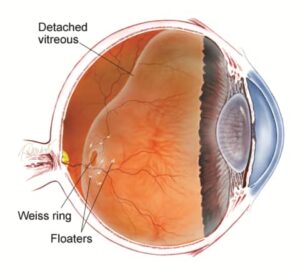
The vitreous is naturally attached to the retina with the help of millions of fine fibres. However, as a person grows older, the vitreous begins to shrink and achieves a fluid-like consistency, and gets detached from the retina. The shrinkage in vitreous humour makes the fibres pull away and cause vitreous detachment.
This detachment gives rise to several problems. This disease of retinal detachment is called posterior vitreous detachment. This problem is common among people ageing around 65. People having the age of 85 are at an even higher risk of developing this condition.
The major cause of vitreous detachment may include various conditions such as myopia (short-sightedness), eye inflammation (uveitis), eye injury. And people who have pre-existing short-sight conditions are also prone to vitreous detachment. If there is an increased number of floaters in the peripheral vision, then it is an indication of the vitreous detachment.
Vitreous Haemorrhage
Vitreous haemorrhage is another disease that involves the appearance of a reddish tint in your vision. The visible symptoms include red eyes, blurry vision, an increase in floaters, and light sensitivity. The major cause of developing vitreous haemorrhage is the rupture of blood vessels surrounding the retina resulting in bloodshot eyes.
Retinal Tears
The retinal tear is caused due to the formation of the fibre clumps on the surface of the retina and causes tearing in the retinal tissue. If a person experiences tearing in their sensitive retinal tissues, immediately seek medical attention. If neglected, it can increase the risk of retinal detachment. Your Ophthalmologist will seal the retinal tears using lasers and cryotherapy.
Understanding Vitreous Humor Degeneration and Detachment
As we age, the vitreous humor undergoes a natural process called syneresis (liquefaction). The gel-like substance begins to shrink and become more watery. This is known as vitreous humor degeneration.
What is Posterior Vitreous Detachment (PVD)?
When the vitreous shrinks enough, it can pull away from the retina at the back of the eye. This is a common condition known as Posterior Vitreous Detachment (PVD). While PVD itself is usually not sight-threatening, it can sometimes lead to retinal tears or detachment if the pull is too strong.
Common Symptoms
If you are experiencing “Vitreous Humor Degeneration,” you may notice:
- Floaters: Small dark spots, hairs, or “cobwebs” drifting in your field of vision.
- Flashers (Photopsia): Brief streaks of light, similar to lightning bolts, usually in your peripheral vision.
- Blurred Vision: A general haziness if the vitreous becomes cloudy.
Treatment For Vitreous Humour Problems
Vitrectomy
Vitrectomy is a procedure used for treating various diseases related to vitreous humour such as retinal detachment, retinal tears, and vitreous haemorrhage. During this procedure, the vitreous humour in your eyes is replaced with silicone gas or oil, and the normal pressure of your eyes is restored.
There are various risks associated with the vitrectomy including an eye infection, excessive bleeding, high pressure in the eye, the formation of cataracts, damage to the lens, retinal detachment post-surgery, and problems in the movement of the eye.
In consideration of these risks, a Vitrectomy should only be performed under severe or critical medical conditions. Usually, inculcating some positive lifestyle changes can help to reduce the number of floaters present in the eyes.

Home Remedies For Vitreous Humour Issues
Restoration of Vitreous Humour
The breakdown of the vitreous humour occurs due to the oxidation of the substances present in the gel. This process occurs naturally in the body system and leaves unstable molecules which causes thinning of the vitreous humour. Limiting the exposure to the factors that are responsible for such oxidation can reduce the risk of getting an eye disease related to vitreous.
Consumption of food such as antioxidants and nutrients would help in preventing the formation of the free radicals in the body. Several food products having natural antioxidants and nutrients can help to reduce the risk of getting floaters in the eyes. This kind of diet should be taken under the prescription of the doctor so that they can help you to create a diet plan where all your nutritional requirements are fulfilled.
Food products including green leafy vegetables, strawberries, oranges, spinach, nuts, and sunflower seeds can provide you with an appropriate amount of nutrition. Some of the nutrients which are required for the good health of the eyes include lutein, zeaxanthin, omega-3 fatty acids, vitamin A, vitamin C, vitamin E, and zinc. Foods rich in lutein and zeaxanthin include broccoli, Brussels sprouts, kale, eggs, corn, nectarines, oranges, papayas, spinach, and lettuce.
In addition to this, a person should include Omega-3 fatty acids-rich foods including flaxseed, salmon, sardines, tuna, and walnuts. Vitamin-rich foods are also proved to be beneficial for eye health, these include mangoes, carrots, sweet potatoes, spinach, broccoli, grapefruit, kiwi, oranges, strawberries, sunflower seeds, chickpeas, oysters, and yoghurt. Natural remedies which can be used to reduce eye floaters include:
- Eat a healthy diet that contains anti-inflammatory food.
- Apply hot and cold compress which will help in the relaxation of your eyes.
- Massage your temples with your eyes closed.
- Reduce your screen time.
- Drink lots of fluid.
- Take a supplement, only under consultation and if necessary.
- Get a good night’s sleep.
- You can also try herbal therapy for reducing the eye floaters in the eyes.
However, no evidence proves that natural remedies are useful in the treatment of vitreous degeneration, although, they can reduce the number of eye floaters that appear in your vision. The thinning of the vitreous humour is normal and progresses as one age.
However, if proper care of the eyes is neglected, then the thinning of the vitreous humour may progress at a young age and lead to various diseases related to the vitreous humour. If you are experiencing an increased amount of eye floaters, blurred vision, and redness in the eyes then it is necessary to seek medical attention and consult an ophthalmologist for proper treatment of the disease-related to vitreous degeneration.
Frequently Asked Questions about Vitreous Humor
The primary function of the vitreous humor is to maintain the spherical shape of the eyeball and keep the retina securely pressed against the back of the eye. It also acts as a shock absorber, protecting the delicate internal structures of the eye from physical trauma, and provides a clear pathway for light to reach the retina.
Unlike the watery aqueous humor in the front of the eye, the vitreous humor is permanent. It is formed during embryonic development and the body does not produce more of it throughout your life. If it is surgically removed (via vitrectomy), the eye replaces the volume with natural fluids or medical-grade saline, but the original gel does not regenerate.
Yes. While it is important for eye development and shape, an adult eye can function perfectly well without the vitreous gel. During surgery for retinal issues or severe floaters, surgeons often remove the vitreous and replace it with saline or a gas bubble. The eye remains healthy and vision can actually improve if the original vitreous was cloudy or bloody.
The main difference is regeneration and location. Aqueous humor is a watery fluid in the front of the eye that is constantly drained and refilled. Vitreous humor is a thick gel in the back of the eye that stays for life. Additionally, aqueous humor regulates eye pressure, while vitreous humor maintains eye shape.
Floaters are caused by vitreous degeneration. As the gel-like vitreous humor ages, it liquefies and tiny fibers of collagen clump together. These clumps cast shadows on your retina, which you see as drifting spots, threads, or “cobwebs” in your field of vision.
The best way to treat your eyes is to visit your eye care professional and get your eyes checked regularly. He will be able to assess the best method of treatment for your eye ailment. Visit our website Eyemantra. To book an appointment call +91-8851044355. Or mail us at eyemantra1@gmail.com. Our other services include Retina Surgery, Specs Removal, Cataract Surgery, and many more.
Medically Reviewed By

Senior Eye Surgeon | LASIK, SMILE & Cataract Specialist

