
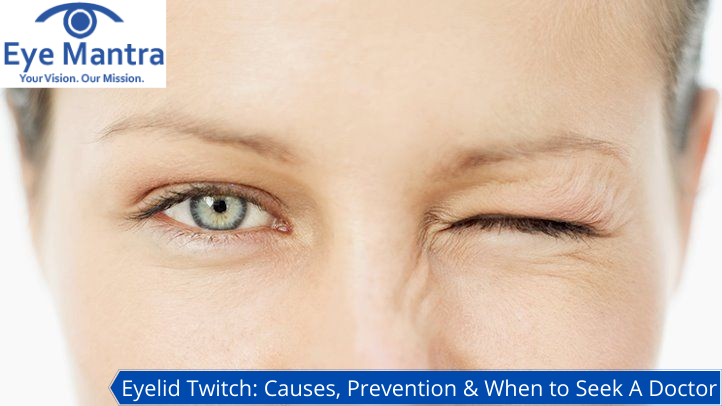
What is an Eyelid Twitch? (Myokymia)
An eye muscle or eyelid spasm or movement you can’t control is known as eye twitch that’s a very common eye condition. It is a repetitive, involuntary spasm of the eyelid muscles in the anatomy of the eye. A twitch usually occurs in the upper eyelid, but sometimes it occurs in both upper and lower eyelids.
For most people, the eyelid twitch feels like a gentle tug on the eyelid. And it is common and harmless at most times. For others, it may be a spasm strong enough to force both eyelids to close completely. This is a different condition called Blepharospasm -a serious neurological condition affecting the eyelid. Such conditions are relatively rare, but Neuro-Ophthalmology Diseases are obviously severe than common eye twitching and should be evaluated immediately by the best eye doctor.
Episodes of eyelid spasms are unpredictable. You may experience the twitch off and on for several days. Then, it may not occur for weeks or even months. Eyelid twitch typically occurs every few seconds for a minute or two. And lasts only a few minutes, but sometimes can persist for days or longer.
Upper vs. Lower Eyelid Twitching: Is There a Difference?
While both are usually caused by the same underlying triggers, users often search for them specifically.
Upper Eyelid Twitching: This is the most common form. It often feels more intrusive because the upper lid has a larger range of motion.
Lower Eyelid Twitching: While less common, this often persists longer.
The Science: In both cases, it is typically a “misfiring” of the orbicularis oculi muscle, usually triggered by external lifestyle factors rather than an eye disease.
Common Causes: Why Your Eye Twitches for Days
Sometimes, electrical activity in the brain causes nerve cells to flash signals to the muscles, which causes twitching. Such spasms do not emerge from any internal or external stimuli, and they do not last long. A one-time eyelid twitch is, most likely, a result of this phenomenon.
Eye twitching may be triggered or made worse by:
- Stress
- Fatigue and lack of sleep
- Eyestrain
- Nutrition problems
- Smoking, alcohol, or caffeine
- Medication side effects
- Allergies
- Bright light
- Irritation of the eye surface or inner eyelids
- Improper eye care in pollution.
- Blepharospasm
If the twitches become chronic, you may have “Benign Essential Blepharospasm”. In other words, chronic and uncontrollable winking, or blinking. This eye disease typically affects both eyes and its exact cause of the condition is unknown. However, the following may make spasms worse:
- Eye flu, Conjunctivitis, or Pinkeye
- Blepharitis, or inflammation of the eyelid
- Dry Eyes
- Irritants from the environment, such as wind, bright lights, sun, or air pollution
- Fatigue
- Light sensitivity
- Stress
- Too much alcohol or caffeine
- Smoking
Benign Essential Blepharospasm is more common in women than in men. And it usually develops in middle to late adulthood. The condition will likely get worse with time, and it may eventually cause:
- Blurred vision
- Increased sensitivity to light
- Facial spasms
Right Eye Twitching for Females: Myths vs. Science
Many women experience a sudden spasm and immediately search for the right eye twitching meaning for females. While various cultures have deep-rooted superstitions about which eye is twitching, the medical explanation is far more practical.
The Science: Why Does It Happen?
From a clinical perspective, an eyelid twitch (myokymia) is a repetitive, involuntary spasm of the eyelid muscles.
- Biological Uniformity: There is no scientific evidence that a twitch in the right eye signifies anything different than a twitch in the left eye based on gender.
- Common Triggers: For both men and women, the primary causes are stress, fatigue, caffeine intake, and eye strain from digital screens.
- Hormonal Factors: In some cases, hormonal fluctuations in females may slightly increase muscle excitability, but this does not target one specific eye over the other.
Myths vs. Reality
In many traditional beliefs, a twitch in the right eye for a woman is often viewed as a “bad omen” or a sign of upcoming bad news, whereas the left eye signifies good luck.
- The Reality: These associations are purely cultural and have no basis in ophthalmology.
- Clinical Focus: At EyeMantra, we focus on the duration and intensity of the twitch rather than which side it occurs on. If your eyelid has been twitching for days, it is usually a sign that your body needs rest or a break from stimulants.
Prevention For Common Eyelid Twitch
Lifestyle Changes
- Because stress is one of the most common causes of eye twitching. Doing yoga, breathing exercises, eye exercises, spending time with friends or pets and scheduling relaxation techniques into your calendar are ways to reduce the stress that may be causing your eyelid twitch.
- Lack of proper rest and sleep, whether it is because of stress or some other reason, can trigger eye twitching. Catching up on your sleep and having a consistent sleep schedule would usually help. Reduce eye strain — particularly computer effect on eyes from overuse of blue screen – also is a common cause of eyelid twitching.
- Follow the “20-20-20 rule” when using digital devices: Every 20 minutes, look away from your screen and allow your eyes to focus on a distant object (around 20 feet away) for 20 seconds or so. This reduces fatigue that may trigger eye twitching. You may also ask your eye doctor about computer eyeglasses to relieve computer eye syndrome.
Nutritional Changes
- Over intake of caffeine can trigger eye twitching. Try reducing the intake of coffee, tea, and soft drinks (or switch to decaffeinated versions) for 1 or 2 weeks and see if your eye twitching disappears.If you experience eye twitching after taking any kind of alcohol, try abstaining for a while, since alcohol consumption may be the cause of eyelid twitch.
- Some studies suggest a lack of certain nutritional elements, such as magnesium, can trigger eyelid spasms. Although these researches are not conclusive, this may be another possible cause of eye twitching. Taking proper eye nutrition may prevent spasms.If you are concerned that your diet may not be supplying all the nutrients you need for a healthy 6 by 6 vision, discuss this with the eye doctor before buying supplements over the counter.
- Most adults experience dry eyes, especially those over the age of 50. Dry eyes, also, are very common among persons using computers, take certain medications (especially antihistamines and some antidepressants), wear contact lenses and consume caffeine and/or alcohol.
Eyecare Routine
- If your eyelid has spasms and your eyes feel gritty or dry, consult your eye doctor for an eye examination. Restoring moisture to the eye surface may stop the eye twitching and decrease the risk of twitching in the future.
- People with eye allergies can have itching, swelling, and watery eyes. Rubbing your eyes because of the symptoms of an allergy releases histamine into your eyelid tissues and tear film, which may cause eye twitching. Sometimes, eye drops, available over the counter, that are specially formulated to reduce allergy symptoms can be helpful. But antihistamines in these drops can cause dry eyes. It’s best to consult the eye doctor to make sure you’re doing the right thing for your eyes if you experience allergy symptoms and eye twitching.
Treatment For Blepharospasm

Eye Botox or Botulinum toxin injections are sometimes used to treat Benign Essential Blepharospasm. Botox may ease severe spasms for a few months. However, as the effects of the injection wear off, you may need further doses.
Eye Muscle Surgery to remove some of the muscles and nerves in the eyelids (Myectomy) can also treat more severe cases of Benign Essential Blepharospasm.
Complicated Cases of Eyelid Twitch
Very rarely, eyelid spasms can be a symptom of a more serious brain or nerve disorder. When these twitches are due to these more serious conditions, they will almost always be accompanied by other symptoms.
Disorders of Nerves And Brain That May Cause Eyelid Twitches Are:
- Bell’s Palsy or Facial Palsy. It is a condition that causes one side of your face to droop downward. That is temporary paralysis on one side of the face due to inflammation or trauma of the facial nerves. Most commonly, it is believed to be brought on by a viral infection.
- Dystonia. This disease causes unexpected muscle spasms and the affected area’s body part to twist or contort.
- Cervical Dystonia or Spasmodic Torticollis. It causes the neck to randomly spasm and the head to twist into uncomfortable positions.
- Meige Syndrome. It is a rare neurological disorder when there are simultaneous spasms in the cheeks, mouth, tongue, and neck.
- Multiple Sclerosis (MS). This is a disease of the central nervous system that causes cognitive and movement problems, as well as fatigue.
- Parkinson’s Disease. It can cause trembling limbs, muscle stiffness, balance problems, and difficulty in speaking. However, a person affected by such disorders would also experience many other signs, such as cognitive difficulties, tremors, or difficulty moving around.
- Tardive Dyskinesia. It is a movement disorder identified by involuntary writhing of the tongue, mouth, or lips, as well as increased blink rate. These cases develop as a side effect of long-term antipsychotic medication use.
- Tourette Syndrome. This condition is characterized by involuntary movement and motor or verbal tics.
- Undiagnosed scratches on the cornea can also cause eyelid spasms.
- Ingrown Eyelash, or Trichiasis.
- Inflamed Eyelid, or Blepharitis.
- Inward – Folded Eyelid, or Entropion.
It may also involve a more repetitive, patterned eyelid twitch. In some cases, an eyelid twitch is caused by physical injury or irritation to the eye itself, rather than neurological dysfunction or nerve irritation.
If you think you have an eye injury, consult your ophthalmologist immediately. Corneal scratches can cause permanent eye damage and loss of vision.
When Should You Visit A Doctor?
Eyelid twitches are rarely serious enough to call for emergency medical treatment. However, chronic eyelid spasms may be a symptom of a more serious brain or nervous system disorder.
You may need to see your eye doctor if you’re having chronic eyelid twitches along with any of the following symptoms:
- An eye is red, swollen, or has an unusual discharge.
- Your upper eyelid is drooping.
- An eyelid completely closes each time you experience a twitch.
- The twitching has been continuous for several weeks.
- The twitching has started affecting other parts of your face.
Eyelid twitch may have many causes. The treatment that helps and the outlook varies depending on the person. Research is being conducted to check if there’s a genetic link, but it doesn’t seem to run in families. Twitches related to stress, lack of sleep, and other lifestyle factors have the best chances of being resolved. If it is due to an underlying health condition, then treating the underlying condition is the best way to relieve the twitching.
Consult a doctor at EyeMantra if your eyelids have been twitching for a few days or if you are feeling any of the severe symptoms listed above. Call NOW at +91-8851044355 to book an appointment. Or you can mail at eyemantra1@gmail.com. Our other services include Cataract Surgery, Retina Surgery, Specs Removal, etc.
Frequently Asked Questions (FAQs)
While most twitches are temporary, an eyelid twitching for days is usually a signal from your body that you are experiencing extreme fatigue, high stress levels, or excessive caffeine consumption. If the twitching persists beyond a week or is accompanied by the eye closing involuntarily, it is important to consult an eye specialist to rule out underlying nerve issues.
Both upper eyelid twitching and lower eyelid twitching are typically caused by the same triggers, such as eye strain or lack of sleep. However, upper lid spasms are more common and often more noticeable, while lower lid twitches can sometimes feel like a more persistent, deep-seated vibration.
No, there is no scientific evidence that right eye twitching for females differs medically from twitching in males or in the left eye. While various cultural superstitions exist regarding “luck” associated with a specific eye, clinically, it is simply an involuntary muscle spasm (myokymia) triggered by lifestyle factors.
The fastest way to get rid of an eyelid twitch is to address the immediate trigger: reduce your caffeine intake, ensure you get 7–8 hours of sleep, and apply a warm compress to the eye to relax the muscle. If digital eye strain is the cause, following the 20-20-20 rule (looking at something 20 feet away for 20 seconds every 20 minutes) can provide quick relief.
In rare cases, an eyelid twitch can be a symptom of more complicated neurological disorders like Blepharospasm or Hemifacial Spasm. You should visit a doctor if the twitching causes your eyelid to droop, involves other facial muscles, or is accompanied by redness and discharge.
Medically Reviewed By

Senior Eye Surgeon | LASIK, SMILE & Cataract Specialist

